A Fire Call Ended in Gunfire: The Unanswered Questions on Randolph Avenue
After a fatal police shooting on Randolph Avenue, the questions go beyond whether force was lawful: why aren't trained crisis specialists part of more emergency responses?
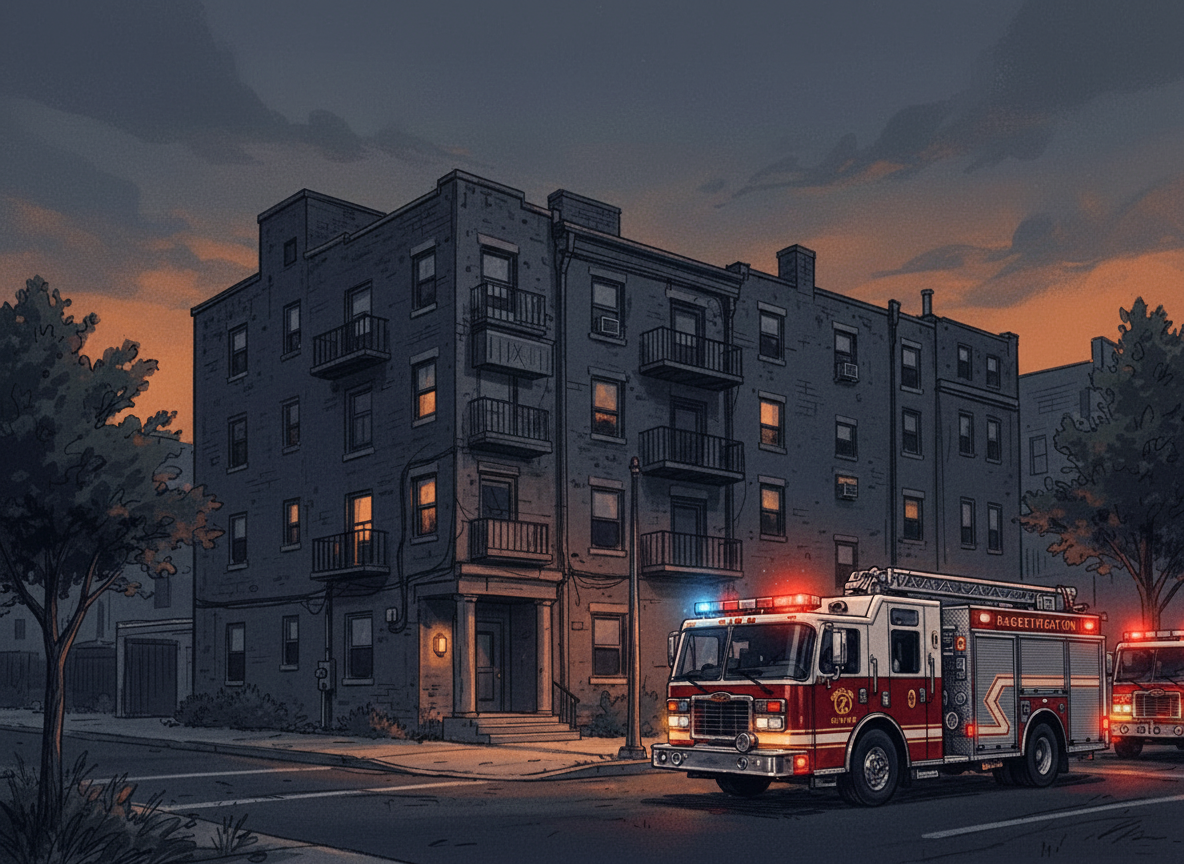
A fire call on Randolph Avenue in Hagerstown ended with a man dead after police shot him on October 23. Think about that for a second. Firefighters showed up because of a fire, and by the time this was over, somebody had lost his life. Now the Maryland Attorney General's Independent Investigations Division is investigating. And before anybody decides this is an open-and-shut case based on a headline, I'd like to know what the hell actually happened.
What investigators have said
Here's what the Maryland Attorney General's office said in its October 24 statement. Firefighters were dealing with an apartment fire shortly before 4:50 p.m. when they encountered a man and called police for help. Officers set up a perimeter. According to investigators, the man ran toward officers, police gave commands, Tasers were deployed, and then officers fired their guns. The man was taken to a hospital, where he was pronounced dead. Investigators say two knives were recovered, and no officers were injured. That's the official preliminary account. It's important information, but it's not the same thing as seeing every second of the encounter for ourselves.
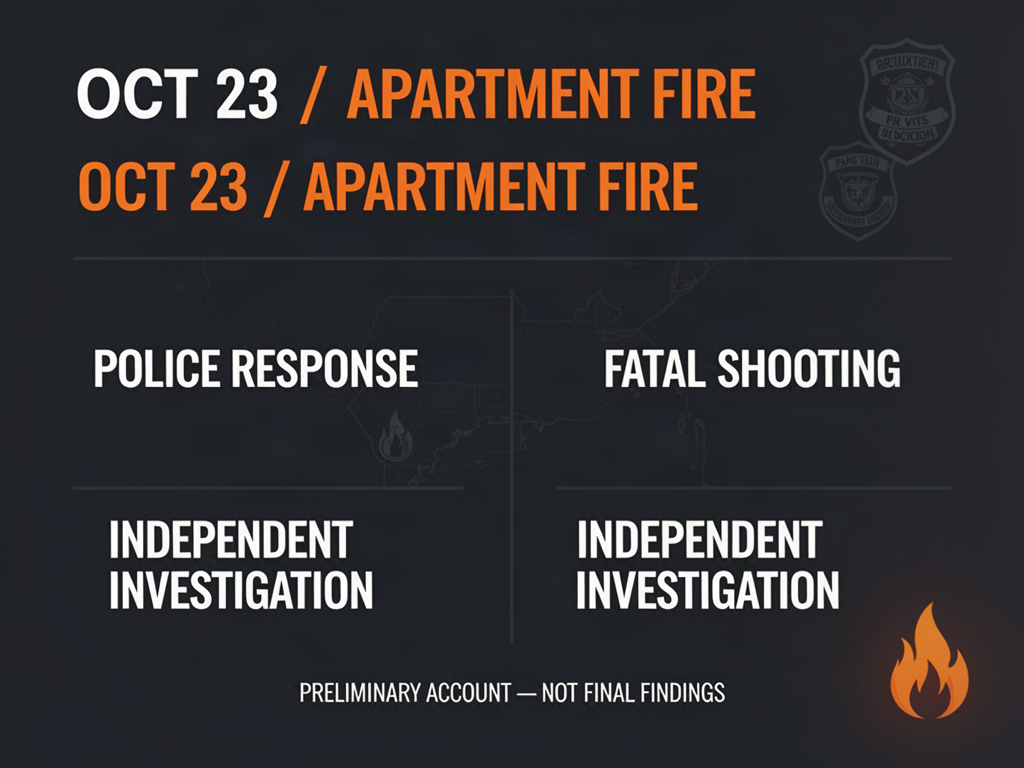
Then there's the fire itself. The Maryland State Fire Marshal's office later determined that the fire at 61 Randolph Avenue was intentionally set. Six people were displaced, and the damage was estimated at around $50,000. That's serious shit, and those residents deserve attention too. But an arson finding doesn't automatically tell us who started the fire, and it damn sure doesn't answer whether the shooting was justified. Those are separate questions.
What body-camera footage could clarify
The officers reportedly had body cameras. I want that footage released and examined carefully. How far away was the man? What could officers actually see? Were the knives visible? What commands were given? Did the Tasers connect? How much time passed before the shots? Those details matter. The Attorney General's division generally aims to release footage within 20 business days, although that timeline can change. And when it comes out, I don't want anybody cherry-picking three seconds to prove whatever they already believed. Show the sequence and let the evidence speak.
I'm not going to act like knives can't be dangerous. They absolutely can. But finding knives at a scene isn't a magic phrase that ends the conversation. Neither is saying officers tried Tasers. The question is what threat existed at the moment shots were fired and what realistic options were available. That's what the investigation needs to establish.
Why wasn't a crisis specialist part of the response?
Here's the part I can't stop thinking about: why do we keep expecting police to be everything at once? Firefighters are handling a fire, police arrive because somebody might be dangerous, and now we're supposed to trust that the same response is equipped to recognize psychosis, withdrawal, confusion, or some other medical crisis too? I'm not diagnosing this man. We don't have evidence for that. I'm saying these situations happen, and our response system needs to be prepared before somebody ends up dead.
I want actual specialists involved. Crisis negotiators. Behavioral-health clinicians. People who understand the difference between somebody refusing a command and somebody who genuinely can't process it. And no, I'm not talking about sending an unprotected social worker charging into an active knife threat. Use dispatch screening, specialists advising by phone or video, trained teams staging nearby, and officers who know how to create time and distance when it's possible. We can figure out how to make that work.
More responders mean more risk. So build a smarter system.
And I already hear the argument: 'So now officers have to protect two more people?' That's a real concern. More people can mean more danger, more confusion, more responsibility. I get it. But figure the shit out. Have specialists advise remotely or wait somewhere safe until they're needed. Nobody said they all need to stand in the line of fire. An operational problem is something you solve, not an excuse to never try.
And since everybody suddenly becomes a budget expert whenever prevention comes up, let's talk about taxpayers. Cities and states can end up paying legal fees, settlements, and judgments after police misconduct or wrongful-death lawsuits. I'm not saying that's what's going to happen here. I'm saying it's ridiculous that we'll argue about the price of prevention while accepting the enormous human and financial costs that can come afterward. If better crisis response can save lives and protect officers, why isn't that investment worth taking seriously?
The people affected
And don't forget the people living in that building. Six residents were reportedly displaced by the fire. Somebody's family is now grieving a death. Their lives don't stop mattering just because everybody online wants to argue about police. I want verified answers about the man's identity, the family's perspective, what witnesses saw, what the fire investigation establishes, and what the cameras show. Rumors aren't reporting.
6IX TAKE — At What Point Do We Admit This Shit Isn't Working? One thing about me, I'm always going to be critical of police. I don't give a fuck if that makes somebody uncomfortable. I think we have a serious problem with the way we approach policing in this country, and I think an even bigger problem is that we've gotten so comfortable with how things operate that we don't even question whether there's a better way to do shit. A man is dead. Police responded to an emergency on Randolph Avenue, and somewhere between arriving and the situation ending, somebody lost their life. I'm not going to pretend I know everything that happened. I don't. And I'm not going to pretend police don't encounter dangerous situations, because they absolutely do. But I think we need to have a serious conversation about what police are actually trained to do. Because in my opinion, police are trained more to stop situations than they are to understand them. Those are two completely different things. Somebody could be experiencing psychosis. Somebody could be going through withdrawal. Somebody could be having a mental breakdown, confused, scared, or completely disconnected from what's happening around them. And what do we do? We send people whose primary responsibility is to establish control. I'm not saying that's what happened to this man. We don't know that. I'm saying those are real possibilities emergency responders need to be prepared for. Why the fuck aren't we making more of an effort to have actual experts involved? People who specialize in de-escalation. People who understand mental illness. People who can recognize the difference between somebody deliberately refusing commands and somebody who might not even be capable of processing those commands in the first place. And before somebody says it, yes, I understand that creates another problem. Two more responders could mean two more people in danger. More coordination. More responsibility. A whole lot more shit to figure out. But figure it the fuck out. Seriously. We're talking about people's lives. I'm not saying throw unarmed mental-health workers into dangerous situations and hope for the best. They can advise officers remotely, assist with communication, help assess what's happening, or respond once it's safe. We have the technology. We have people who specialize in this work. What we need is the willingness to actually build something around them. And then there's the taxpayers. When departments get sued over misconduct or wrongful deaths, who can end up paying for that shit? Us. People who had absolutely nothing to do with the encounter. I'm not claiming that will happen in this case. I'm talking about the larger problem. We can spend millions dealing with the aftermath of police misconduct, but when somebody suggests spending money on prevention, suddenly everybody wants to talk about budgets. Nigga, what? At some point we have to decide whether we're interested in preventing these situations or just comfortable paying for the consequences afterward. I'm not asking for a perfect system where nobody makes a mistake. I'm asking why we're so reluctant to improve a system that clearly has room for improvement. I want to know what happened on Randolph Avenue. I want to see the footage. I want to understand what the officers saw, what decisions they made, and whether there were other options available. And if the evidence shows they genuinely had no reasonable alternative, that's part of the conversation too. But I refuse to accept that somebody having a weapon automatically means we stop asking questions. A person is dead. We should have a whole lot more questions than answers right now.
SOURCE / RECORDMaryland Attorney General's preliminary releaseOfficial October 24 statement and information for witnesses.
SOURCE / RECORDFire marshal finding and local reportingFollow-up on arson determination and displaced residents.
Talk your shit.
Agree, disagree, add context, challenge the take. Keep it about the conversation.
Your account name stays attached to your comments, so nobody can just type your name and pretend to be you.